
Downsizing In Brantford: Condo, Bungalow, Or Smaller Freehold?
TL;DR
- A condo can reduce outdoor work, but you trade some control for monthly fees and shared rules.
- A bungalow can offer main-floor living, but the entrance, laundry, driveway, and basement still need a close look.
- A smaller freehold keeps more independence and outdoor space, along with the maintenance that comes with it.
- Compare the total monthly cost and weekly workload, not just the purchase price.
- Choose for the next five to ten years, not only for how you live today.
Choose The Next Chapter Before You Choose The Property Type
Downsizing in Brantford works best when you start with the life you want, then choose the property that supports it. This guide compares condos, bungalows, and smaller freehold homes by maintenance, accessibility, control, cost, and location.
The goal is not to find the smallest home. It is to find a home that removes work without removing the parts of homeownership you still enjoy.
My article on why many Canadian seniors are not downsizing covers the broader housing, cost, and emotional pressures. This guide starts at the next decision: what kind of Brantford home could actually make the move worthwhile?
Table Of Contents
- Matt’s Stats
- Why Square Footage Is Only The Starting Point
- When A Condo Makes Sense
- When A Bungalow Makes Sense
- When A Smaller Freehold Makes Sense
- Compare The Full Cost And Workload
- Plan The Sale And Purchase Together
Matt’s Takes
| Choice | What You May Reduce | What You Still Need To Check |
|---|---|---|
| Condo | Yard work, snow removal, exterior upkeep | Condo fees, rules, reserve fund, elevator and parking access |
| Bungalow | Daily stair use when key rooms are on one floor | Entry steps, basement laundry, driveway, roof and yard care |
| Smaller freehold | Interior cleaning, heating needs, unused rooms | Exterior maintenance, snow, landscaping and future accessibility |
Why Square Footage Is Only The Starting Point
A smaller home can still be more work than expected. A compact house with a steep driveway, narrow doors, basement laundry, and a large garden may be harder to manage than a larger condo on one level.
Start by listing the jobs you want to stop doing. Snow removal, lawn care, stairs, exterior repairs, cleaning unused rooms, and driving to everyday errands are common examples. Then list what you want to keep, such as a workshop, guest room, garden, private entrance, or space for a pet.
CMHC recommends considering your monthly housing budget, mobility needs, access to family and services, transit, maintenance, and the amount of space you actually need. housing options for seniors
That is a better starting point than deciding you need a condo because it sounds like the standard downsizing move. There is no prize for choosing the smallest floor plan if it makes your daily life worse.
When A Condo Makes Sense For Downsizing In Brantford
A condo may suit you if the main goal is reducing exterior work. Snow removal, landscaping, common-area cleaning, and major exterior projects may be handled through the condo corporation, depending on the property.
The tradeoff is shared control. Condo declarations, bylaws, and rules can affect pets, parking, renovations, and how parts of the property are used. Fees also vary by building and by what they include.
For a resale condo, the Condominium Authority of Ontario recommends reviewing the corporation’s reserve fund, age, amenities, governing documents, and status certificate. what to review before buying a resale condo
The status certificate is not paperwork to skim while the kettle boils. It can include the budget, reserve fund information, legal issues, rules, and details tied to the unit. My internal guide to condo status certificates explains why your lawyer should review it.
Access also needs an in-person check. Look at the route from your parking space to your unit while carrying groceries. Check elevator reliability, hallway distances, visitor parking, storage, doorway widths, bathroom layout, and whether a walker could move comfortably through the space.
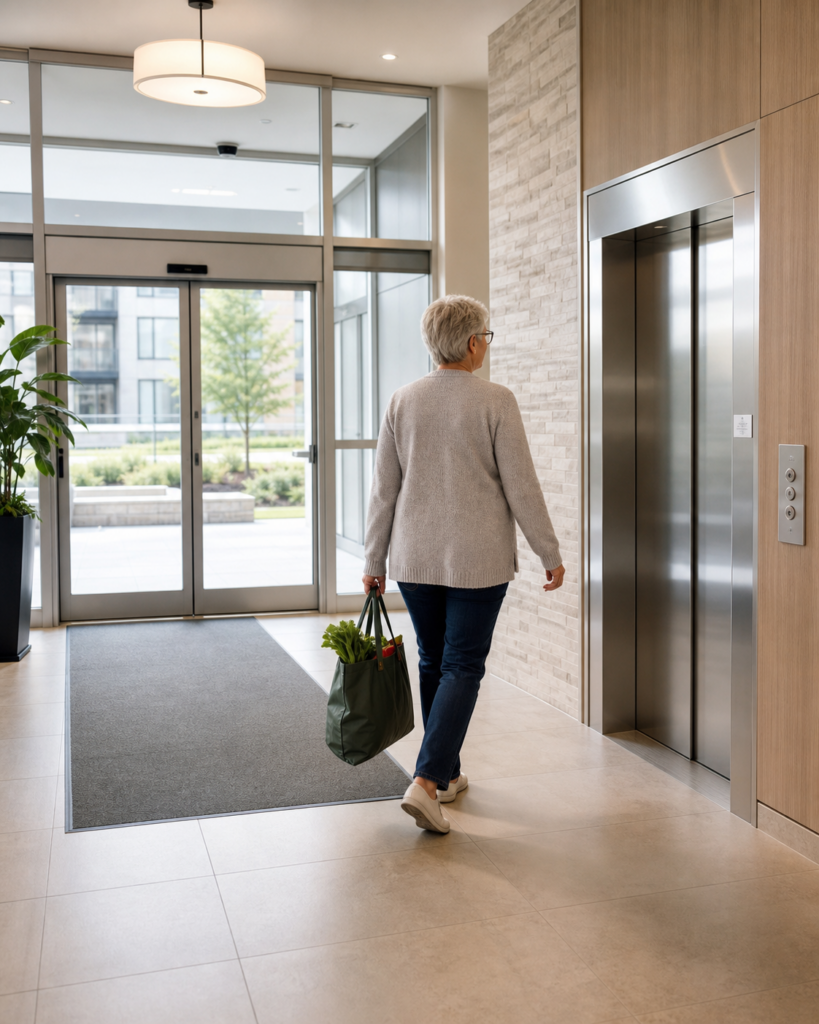
If a condo is your likely choice, my Brantford condo comparison explains how fees, utilities, parking, and property style affect the full monthly cost.
When A Bungalow Makes Sense For Downsizing In Brantford
A bungalow can preserve the feeling of a detached home while putting the bedroom, bathroom, kitchen, and living area on the main floor. You may keep a private driveway, yard, garage, basement storage, and more freedom to make changes.
Still, the word bungalow does not guarantee easy access. Some have several front steps, narrow hallways, small bathrooms, basement laundry, or a sloped driveway. Others have additions or level changes that create surprise steps inside.
Walk through the home as if your mobility had changed. Could the laundry move to the main floor? Is there enough space for a walk-in shower or grab bars? Could you enter from the driveway without climbing steps? Is the yard small enough to enjoy without becoming another job?
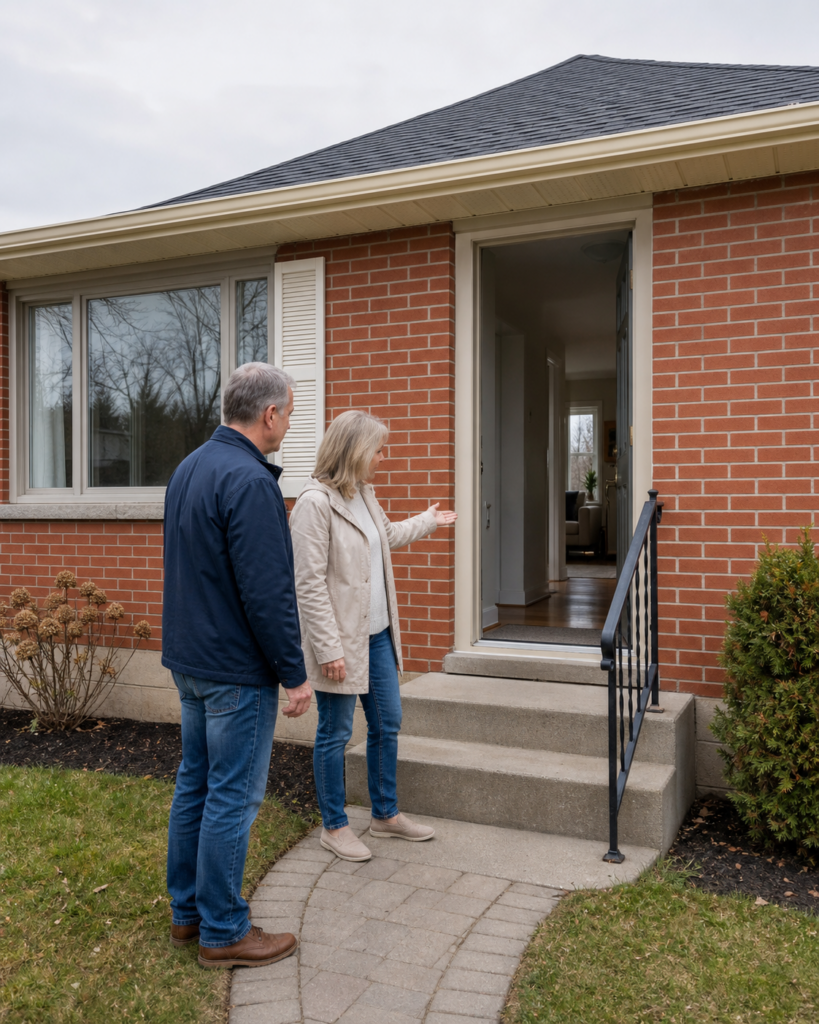
A bungalow also leaves you responsible for the roof, furnace, driveway, lawn, snow, and exterior repairs. You can hire help, but that cost belongs in the monthly plan. Low maintenance and no maintenance are not the same thing.
The strongest bungalow choice is usually the one that works now and can be adapted later without a major rebuild.
When A Smaller Freehold Makes Sense
A smaller freehold may be the middle ground for someone who wants less house but does not want condo rules or fees. That could mean a compact detached home, semi-detached home, or freehold townhouse.
You keep control over renovations, outdoor space, and how the property is used within municipal rules. You may also keep familiar routines such as gardening, barbecuing, or working in a garage.
The catch is that the maintenance does not disappear. A smaller roof costs less than a large roof, but it still needs replacement one day. Snow, grass, windows, drainage, and exterior repairs remain your responsibility.
Freehold townhouses and semis can also have shared walls, tighter parking, or smaller yards. Check the actual property rather than relying on the label. A narrow three-storey townhouse may have less square footage than your current home while giving you more stairs.
Compare The Full Cost And Workload
Purchase price matters, but it is only one line in the comparison. Build a simple monthly and annual worksheet for each serious option.
Include:
- Mortgage payment, if any
- Property taxes
- Condo or common-element fees
- Utilities
- Home and condo insurance
- Lawn care and snow removal
- A repair and maintenance allowance
- Parking or storage costs
- Expected accessibility changes
- Travel costs to family, health care, shopping, and regular activities
Then create a second list for time and physical work. How many hours will the property ask from you each week? Which jobs do you enjoy, which can you hire out, and which do you want gone?
The City of Brantford’s Healthy Aging Strategy treats housing as part of staying connected to community and identifies accessible housing and aging in place as local priorities. Brantford’s Healthy Aging Strategy
Location should be part of the home comparison for the same reason. A smaller property near family, groceries, parks, transit, and medical appointments may remove more stress than a lower-priced home that adds driving to every week.
Plan The Sale And Purchase Together
Downsizing usually combines two large decisions: selling the current home and buying the next one. Treating them as separate projects can create avoidable pressure.
Before listing, estimate the likely sale range, mortgage payout, legal costs, moving costs, and the work needed to prepare the home. My article on what buyers notice when you sell can help you avoid spending money on fixes that may not improve the result.
Next, decide how much certainty you need. Some sellers want to find the next home first. Others need to know what their current property will sell for before committing. The right sequence depends on your finances, tolerance for temporary housing, available properties, and the conditions you can safely use.
Do not forget the physical move. Measure the furniture you truly want to keep. Price movers, storage, disposal, and help with sorting. If a property only works when every cupboard is packed like a game of Tetris, it may not be the easy next chapter you had in mind.
Test The Choice Before You Offer
Tour one good example of each property type, even if you think you already know the answer. A condo visit may show how much you value one-floor living. A bungalow may remind you that you still want a garage. A smaller freehold may reveal how much outdoor work you are willing to keep.
Use the same checklist at every showing:
- Can I enter, park, carry groceries, and reach the main rooms easily?
- Are the bedroom, full bathroom, kitchen, and laundry on a practical route?
- What maintenance is mine, what is shared, and what would I hire out?
- What will this cost each month after every fee and service is included?
- Will this location keep me close to the people and places I use?
- Could this home still work if my mobility changes?
Your answer may be a condo, bungalow, or smaller freehold. The useful part is knowing why it fits.
Compare Your Brantford Downsizing Options With A Real Plan
If you are thinking about downsizing in Brantford, contact Matt before you start editing your belongings around a home you have not chosen yet. We can compare the likely sale of your current property, tour each housing type, and build the move around your budget, workload, and next-stage needs.